

The Singapore government has announced some notable changes to its schemes designed to encourage the adoption of electric vehicles (EVs). These revisions will see lower rebates for EV buyers and the complete removal of rebates for petrol-hybrid cars.
The two main schemes, the Vehicular Emissions Scheme (VES) and the EV Early Adoption Incentive (EEAI), which were set to expire at the end of 2025, have both been extended, but with significant adjustments.
The VES will be extended for another two years, running until the end of 2027. Under the new rules, petrol-hybrid vehicles will no longer be eligible for rebates. In contrast, surcharges for high-emission vehicles will be increased. For the most polluting cars, the surcharge will rise from the current $25,000 to $35,000 in 2026, and further to $45,000 in 2027.
The EEAI will also be extended for one year before being phased out completely at the end of 2027. The incentive provided under this scheme will be halved from $15,000 to $7,500.
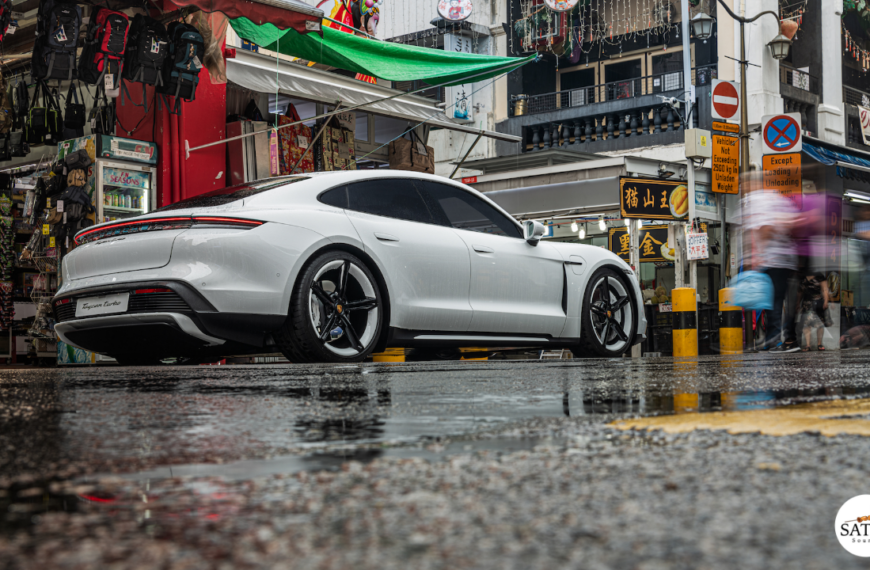
As a result of these changes, the maximum combined rebate for new EV buyers will drop from the current $40,000 to $30,000 starting in 2026. This figure will then decrease to $20,000 in 2027 once the EEAI is discontinued. The Land Transport Authority (LTA) and the National Environment Agency (NEA) have jointly issued a statement acknowledging that this could lead to a short-term increase in COE prices and have advised potential car buyers to “be prudent in bidding for COEs.”
According to the LTA and NEA, these revisions are in response to the growing adoption of cleaner-energy vehicles in Singapore. They noted that between January and August of the current year, cleaner-energy vehicles accounted for 80% of new car registrations, with half of those being EVs. The agencies also cited the narrowing cost gap between EVs and traditional petrol cars as a key factor.
The authorities stated that the overall benefits will continue to be adjusted as Singapore works towards its goal of having 100% cleaner-energy vehicles by 2040, in support of the national target to achieve net-zero emissions by 2050.
Associate Professor Walter Theseira of the Singapore University of Social Sciences commented on the decision, stating that the reduction in subsidies is a logical step given that the initial purpose was to offset the higher upfront cost of the technology. He added, “It is clear that EV subsidies are not needed in full force when you have Chinese carmakers being able to sell vehicles at more competitive prices and with better features than cars with combustion engines.”
Dr. Zafar Momin, an adjunct professor at the NUS Business School, echoed this sentiment, suggesting that the reduced incentives reflect the government’s confidence in the continued growth of EV demand, especially as battery prices are expected to decline.